In today’s digital-first economy, businesses are generating vast amounts of data daily—from customer feedback and internal operations to marketing performance and product usage. Yet, only a fraction of this data is truly leveraged due to limitations in traditional data analysis tools that often require technical expertise, coding skills, and a significant time investment. Relevance AI emerges as a solution to this challenge, offering an intuitive, no-code platform that enables teams to perform relevance ai advanced analytics and extract insights from both structured and unstructured data. As organizations seek to become more data-driven, platforms like Relevance AI are not just helpful—they are essential.
Understanding Relevance AI and Its Core Capabilities
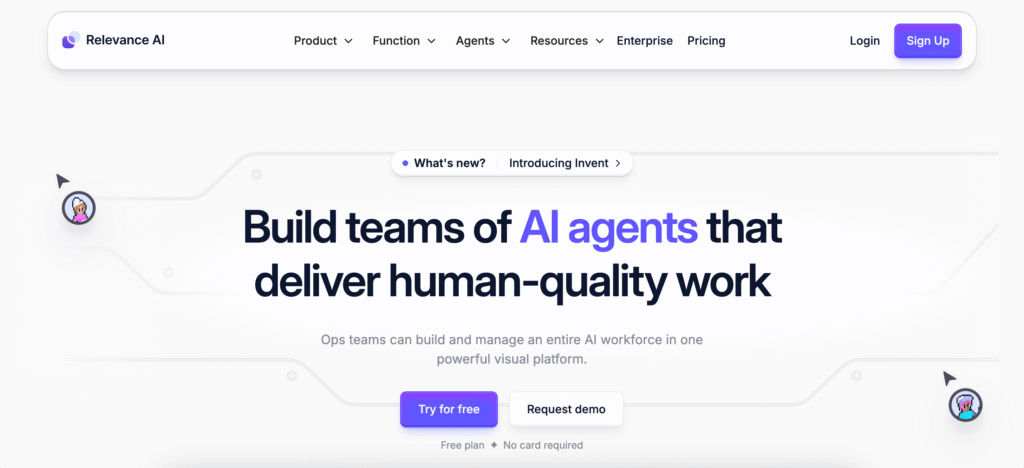
Relevance AI is a powerful data analysis platform designed to simplify how businesses interpret and act on their data. At its core, the platform empowers users—especially non-technical team members—to harness the power of artificial intelligence without writing a single line of code. One of its most prominent features is its ability to work with unstructured data such as text, customer reviews, chat logs, and survey responses. Traditionally, analyzing this type of data required data scientists and custom machine learning models. Relevance AI changes this by providing ready-to-use workflows and tools that make text classification, sentiment analysis, clustering, and summarization easily accessible.
The platform integrates various AI models under a single interface, enabling users to build custom dashboards, automate repetitive analysis tasks, and visualize results in real-time. Teams can plug in data from multiple sources, including Excel files, CRMs, and cloud storage services, and begin generating insights within minutes. This accessibility means that marketers, product managers, and customer service leaders can now make informed decisions based on real data, without waiting for help from data specialists.
Democratizing Data Analytics Across Teams
One of the most significant advantages of Relevance AI is its mission to democratize access to powerful data tools. Traditionally, data analysis has been confined to the hands of technical users—data scientists, engineers, and analysts. This siloed approach creates delays and bottlenecks, as business teams must request reports and wait for insights. Relevance AI removes these barriers by making AI tools usable for everyone, regardless of technical background. This democratization accelerates decision-making, promotes cross-functional collaboration, and leads to more agile and responsive organizations.
The platform’s no-code interface is key to this transformation. Users can simply drag and drop datasets, apply prebuilt analysis templates, and visualize results without needing to learn programming languages like Python or R. Additionally, Relevance AI offers customization through workflows, which allow users to build repeatable processes for their data—whether that means analyzing customer sentiment weekly or generating product feedback reports monthly. These workflows can be automated, freeing up time and ensuring consistent analysis across projects.
Applications Across Industries
Relevance AI has proven valuable across a wide range of industries, including e-commerce, healthcare, SaaS, and financial services. In e-commerce, for example, companies can use the platform to analyze product reviews at scale, identifying common customer pain points and opportunities for improvement. In healthcare, teams can process patient feedback or support transcripts to improve patient experiences and operational efficiency. For SaaS companies, Relevance AI helps teams analyze user feedback, support tickets, and usage data to prioritize product development efforts and improve customer satisfaction.
Even customer experience teams have found Relevance AI useful in turning thousands of support chats and surveys into actionable insights, helping them reduce churn and improve Net Promoter Scores (NPS). By making qualitative data analysis scalable, the platform ensures that no feedback goes unheard and that data-driven decisions are based on the full spectrum of customer voices.
Conclusion: Empowering Data-Driven Decisions at Scale
Relevance AI represents a significant shift in how modern businesses can approach data analytics. By removing the complexity of traditional data tools and offering a no-code, AI-powered platform, it empowers teams across departments to extract meaningful insights from all types of data—structured and unstructured alike. This capability is no longer a luxury but a necessity in today’s competitive landscape, where decisions must be fast, informed, and customer-centric. As the demand for data-driven strategies continues to rise, platforms like Relevance AI will play a central role in shaping the future of business intelligence.